


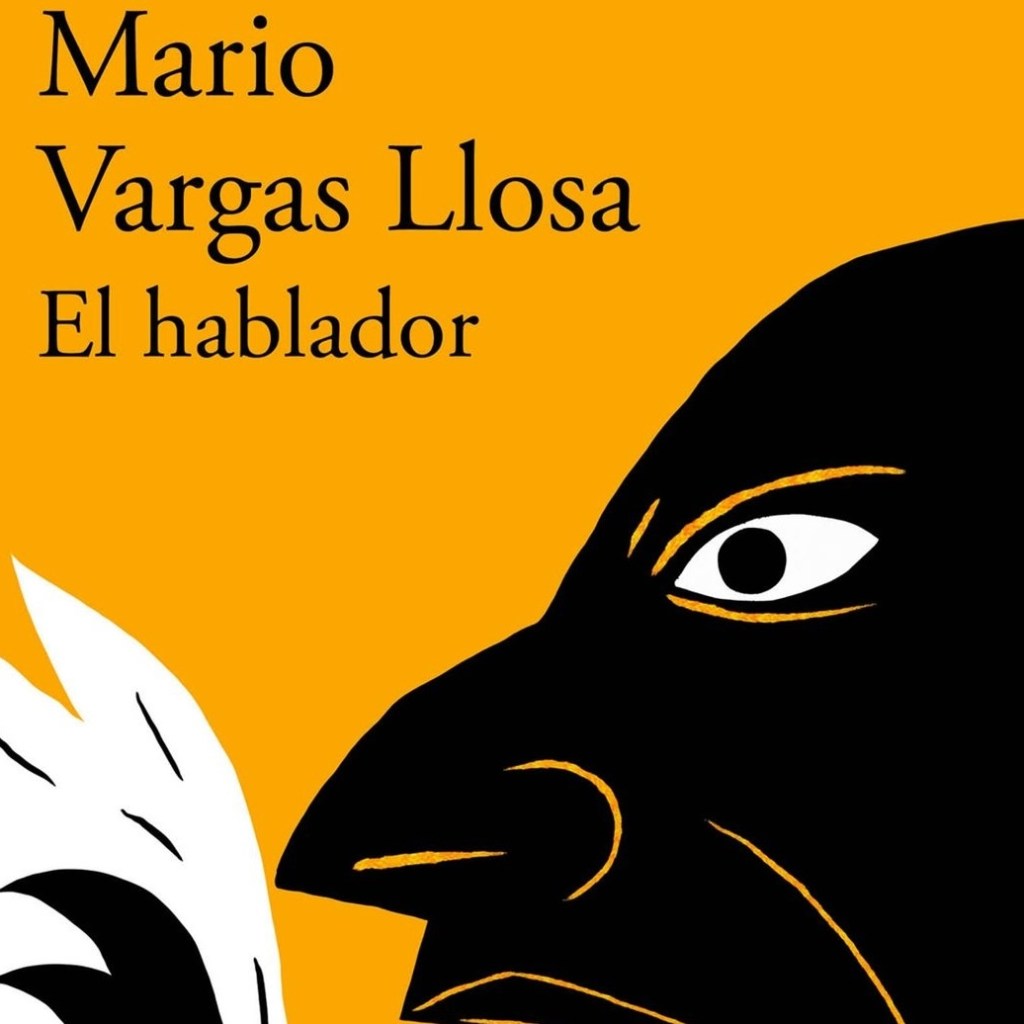
I read Mario Vargas Llosa’s El hablador in Spanish, with Helen R. Lane’s English translation open beside me, and can safely say it changed how I think about storytelling, language, and what we lose and gain when we move between the two.
The novel begins in Florence, where a Peruvian narrator sees a photograph of a “storyteller” among the Machiguenga people of the Amazon. From there, the chapters alternate between his voice and that of the storyteller himself. It’s a dialogue between modernity and myth, city and jungle, written word and oral memory. The structure alone is mesmerizing: you feel the rhythm of walking, listening, retelling.
Being multilingual, I’m not unfamiliar with watching the same story shift in tone and emphasis across languages. El hablador gave me that same sensation… but emotionally instead of intellectually. In Spanish, the prose hums with a kind of gravity, the jungle’s cadence beneath every sentence. Lane’s English version flows beautifully and stays true to Vargas Llosa’s clarity, but you can feel the difference in weight, like air pressure changing between altitudes. It reminded me that translation isn’t copying; it’s interpretation, another act of storytelling.
What struck me most was how much the novel itself is about translation: of cultures, experiences, and ways of knowing. The narrator tries to explain an oral tradition in written form and keeps confronting the limits of language. Reading it made me think about the works we’ve study in translation in my English class (like A Doll’s House and Chronicle of a Death Foretold). We talk about “context” and “voice,” but El hablador lets you feel how fragile those things are when they cross borders.
Beyond the literary questions, this novel also touched something personal for me. With an Italian father and a Peruvian-American mother, I’ve grown up somewhere between worlds, and this story about a man carrying others’ voices through the natural vistas of Peru felt oddly familiar. The book asks what happens when you speak for someone else (or through someone else) and whether that can honestly ever be done with love and respect. For all our sakes, I hope it can.
 Allegra on Art & Architecture