


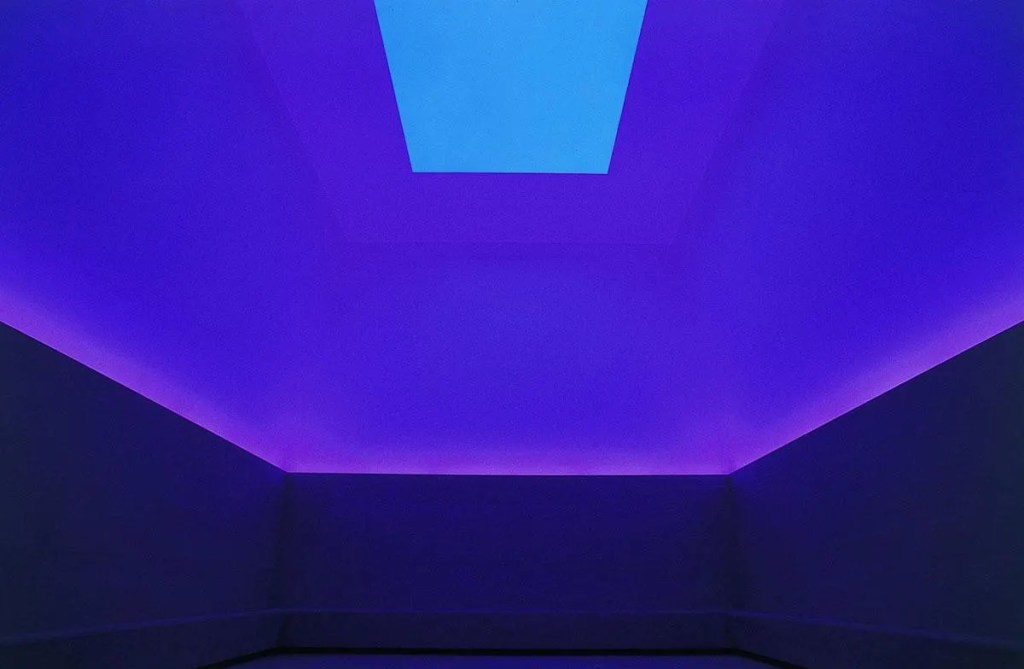
Art doesn’t just decorate life: it is one of life’s senses.
When we walk into a space, our bodies register more than objects and surfaces. We feel the length of a corridor, the hush of a ceiling, the way light skims a wall. Through color, space, and form, art shapes how we think, feel, and move through the world… and no one captures that better than James Turrell.
When I first encountered Turrell’s work, I thought I was stepping into a room to see something. Instead, I was asked to feel what it means to see. His installations slow you down until your eyes and mind start noticing what they usually rush past: how color hums against silence, how space breathes, and how light itself can become a kind of architecture.
Turrell doesn’t build objects; he builds awareness. His Skyspaces and light chambers teach you that perception is participation. You become part of the artwork simply by being present within it. In that sense, Turrell makes you conscious of what it means to inhabit a space. Light becomes the material of design instead of its accessory. Form and void, brightness and shadow: each act on you like instruments in a quiet symphony.
When I think about design now—whether in a museum, a classroom, or a bedroom—I can’t separate it from this lesson. The way a space feels changes the way we think and move through it. A high ceiling invites curiosity; soft corners calm the body; a sudden shaft of sunlight across a wall can change your whole mood. Turrell’s work reveals how subtle those relationships are, and how intentional they can be.
Standing in one of his rooms, you realize that beauty isn’t always something to look at. Sometimes it’s something to stand inside and let wash over you, bathing you clean and new.
 Allegra on Art & Architecture